

Synthesizing Effective Literacy-Based Lesson Planning for Diverse Learners
Introduction
An essential instructional approach for integrating literacy development across content areas is Writing Across the Curriculum (WAC). Rather than treating writing as a skill exclusive to English Language Arts, WAC positions writing as a tool for learning, reasoning, and communicating disciplinary knowledge.
In secondary mathematics classrooms, writing supports conceptual understanding, strengthens mathematical reasoning, and allows students to articulate problem-solving processes in meaningful ways. When intentionally designed, literacy-based lesson planning improves both mathematical understanding and student expression across diverse learner populations.
Purpose of Literacy-Based Lesson Design
The purpose of this lesson design is to:
- Integrate writing as a tool for mathematical reasoning
- Support diverse learners through structured literacy scaffolds
- Improve engagement and conceptual understanding
- Align instruction with both math and literacy standards
This approach ensures that students are not only solving problems but also explaining and justifying their thinking.
Synthesis of Research-Based Lesson Design
Analysis of research-based instructional models revealed two strong approaches to writing in mathematics:
- Writing-to-Learn strategies (Hwang et al., 2024), such as journaling and quick writes, which help students process ideas informally
- Disciplinary literacy approaches (Callus, 2022), which emphasize structured academic writing using evidence and reasoning
Synthesized Approach
This lesson combines both strategies:
- Informal writing to activate prior knowledge and reduce cognitive barriers
- Structured writing using CER (Claim–Evidence–Reasoning) to develop academic discourse
This progression supports both engagement and rigor by allowing students to first explore ideas, then formalize their mathematical reasoning.
Instructional Design Features
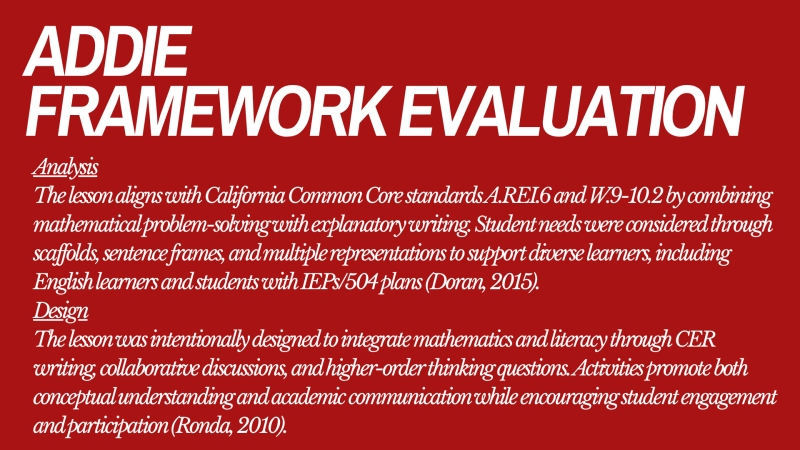
The lesson was designed to ensure alignment with:
- Academic content standards
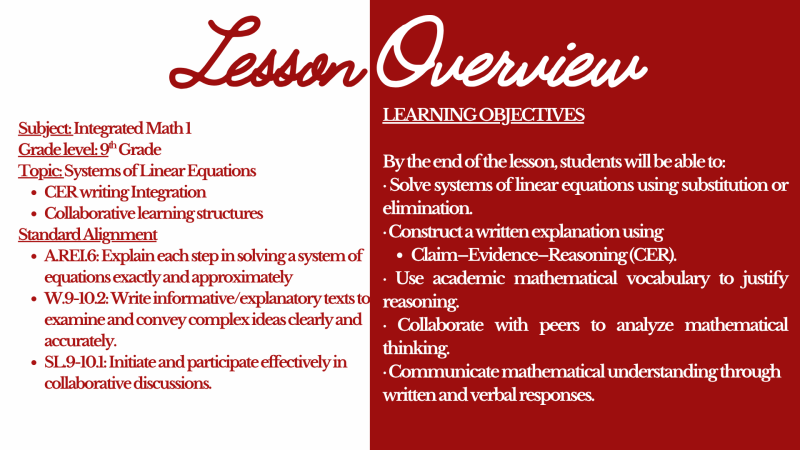
- Literacy standards (W.9-10.2)
- Research-based instructional practices
Key instructional features include:
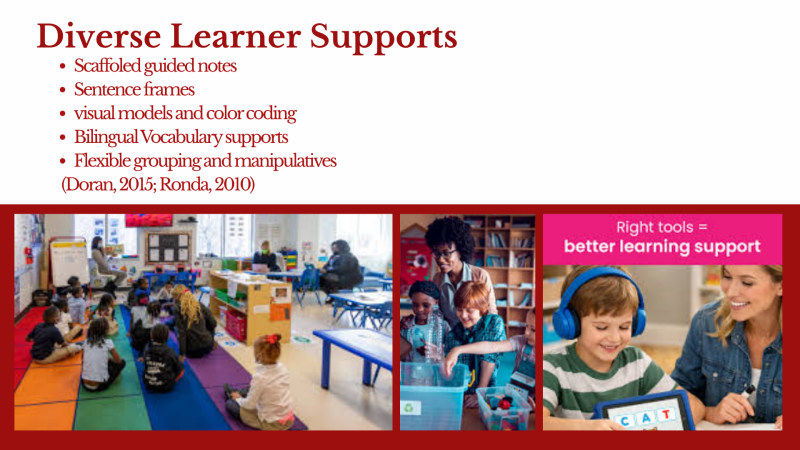
- Scaffolding (sentence frames, guided notes, graphic organizers)
- Collaborative learning structures
- Explicit modeling of academic writing
- Opportunities for peer feedback
- Differentiated support for diverse learners
These elements ensure accessibility while maintaining academic rigor.
Strategies for Supporting Diverse Learners
English Learners (ELs)
- Sentence frames for academic writing
- Vocabulary banks
- Modeled responses
- Structured peer discussion
Students with IEPs / Learning Needs
- Chunked tasks and step-by-step instruction
- Graphic organizers
- Oral rehearsal before writing
- Extended time and flexible output formats
Advanced Learners
- Error analysis tasks
- Multiple solution comparisons
- Justification of reasoning strategies
- Open-ended mathematical challenges
General Education Students
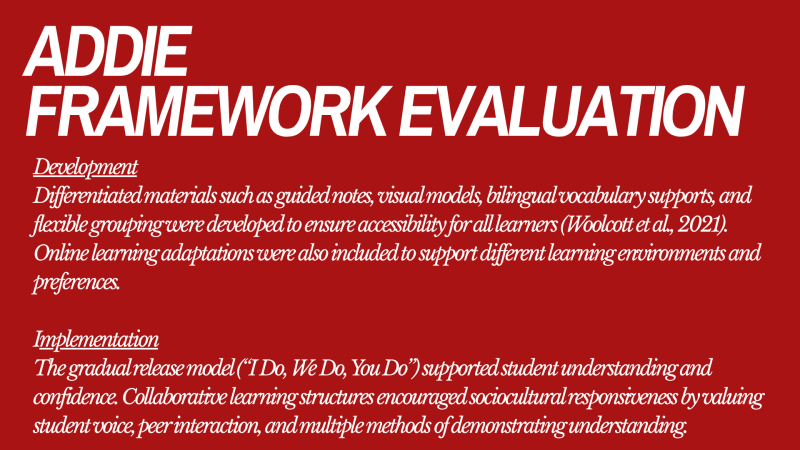
- Guided practice with gradual release
- Structured peer feedback
- Vocabulary development embedded in instruction
These strategies ensure equitable access while maintaining rigor for all learners.
Writing Across the Curriculum (WAC) in Mathematics
Writing in mathematics serves multiple purposes:
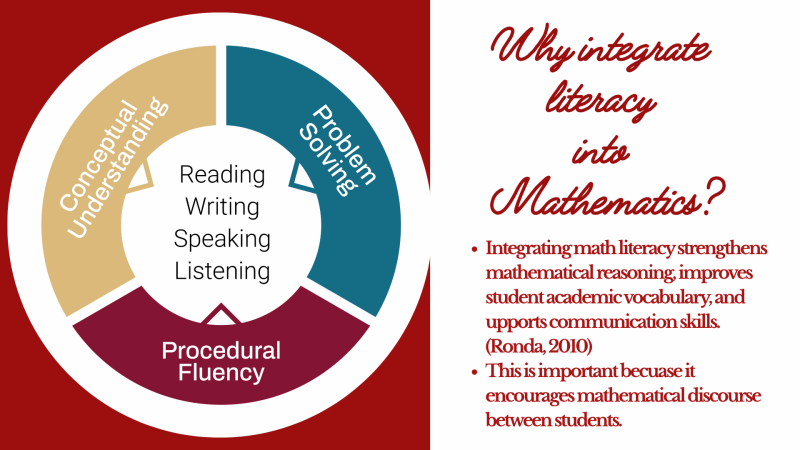
- Strengthens conceptual understanding
- Encourages mathematical reasoning
- Develops academic vocabulary
- Supports communication of problem-solving processes
CER Framework Integration
Students progress through:
- Claim: Final answer or solution
- Evidence: Mathematical steps and calculations
- Reasoning: Explanation of why the solution works
This structure helps students move beyond procedural learning into conceptual understanding.
Fiction vs. Nonfiction Writing in Instruction
Instructional writing choices should be guided by purpose:
Fiction Writing
- Useful for engagement and real-world connections
- Helps introduce abstract concepts through storytelling
- Builds conceptual entry points
Nonfiction Writing
- Essential for disciplinary accuracy
- Focuses on justification and evidence
- Aligns with academic expectations in mathematics
In this lesson design, nonfiction writing is prioritized for assessment and reasoning development, while narrative writing may be used as an engagement strategy.
Technology in Writing-Based Instruction
Technology supports writing instruction when used intentionally.
Benefits
- Real-time feedback (Google Docs)
- Collaboration opportunities
- Revision support
- Access to interactive tools
Challenges
- Overreliance on automated writing tools
- Distractions from devices
- Surface-level engagement if not structured
Balanced Approach
- Initial drafts completed independently
- Digital tools used for revision and feedback
- Explicit instruction on responsible use
This ensures that technology enhances—not replaces—student thinking.
Lesson Structure Overview
The literacy-integrated lesson follows a structured flow:
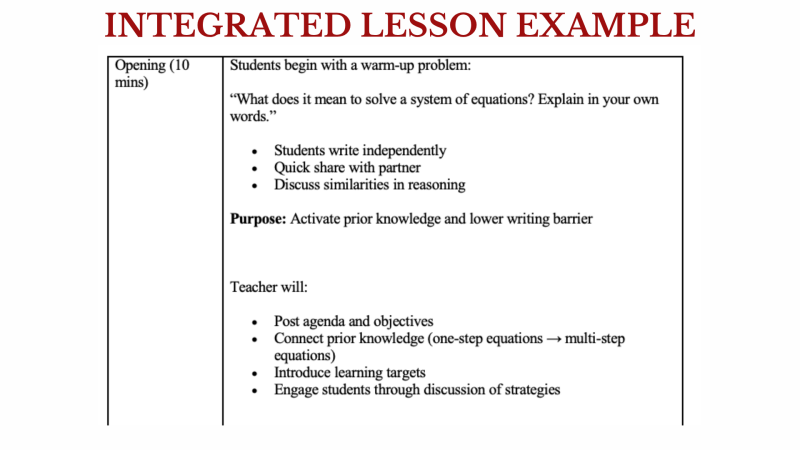
1. Opening (Activation of Prior Knowledge)
- Quick-write prompt
- Partner discussion
2. Instruction
- Teacher modeling
- Guided notes
- Vocabulary development
3. Guided Practice
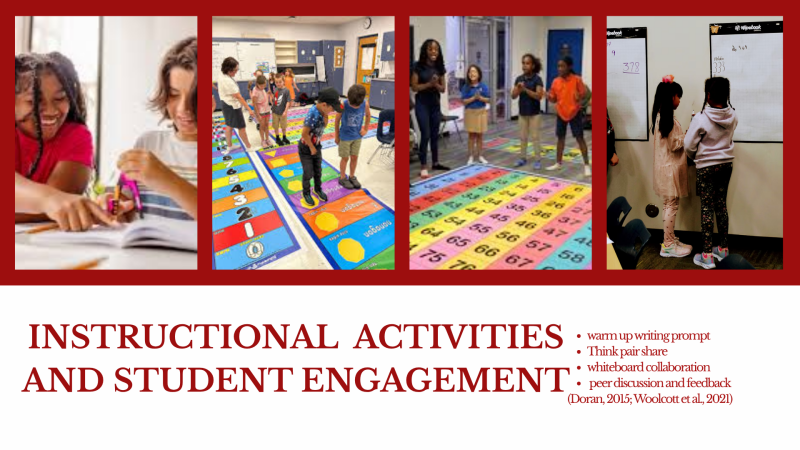
- Collaborative problem solving
- Whiteboard activities
- Think-Pair-Share
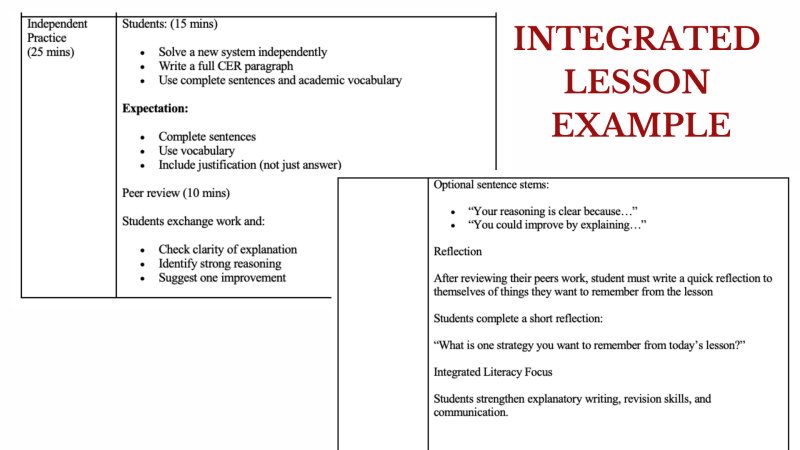
4. Independent Practice
- CER written explanation
- Problem solving task
- Peer review feedback
5. Closure
- Exit ticket with error analysis
- Reflection on learning
Assessment Integration
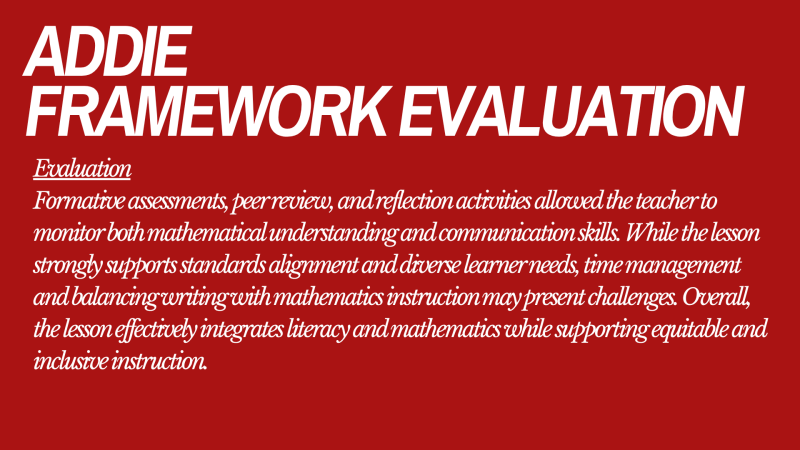
Assessment is embedded throughout instruction:
Formative Assessment
- Whiteboard checks
- Teacher observation
- Verbal questioning
- Exit tickets
Summative Assessment
- Written CER explanation
- Unit assessments
- Problem-solving application tasks
This ensures continuous monitoring of student understanding.
Reflection on Lesson Design
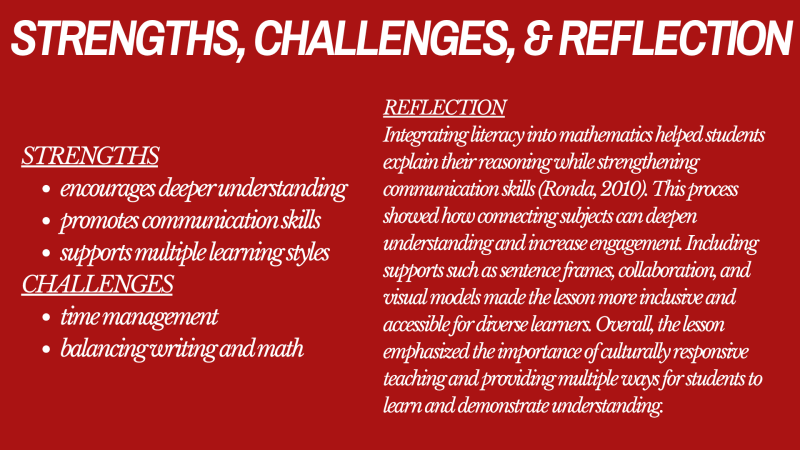
This lesson design demonstrates that literacy is not an add-on but an essential component of mathematical learning.
Key insights include:
- Writing deepens conceptual understanding
- Scaffolding increases access for diverse learners
- Collaboration strengthens reasoning skills
- Structured writing improves clarity and academic discourse
Conclusion
Writing Across the Curriculum transforms mathematics instruction by integrating literacy as a tool for thinking, reasoning, and communication.
When lessons are intentionally designed with scaffolding, differentiation, and multimodal supports, all students, regardless of background or readiness, can engage meaningfully with rigorous content.
Ultimately, literacy-based lesson planning supports not just academic success, but student confidence and voice in mathematics.
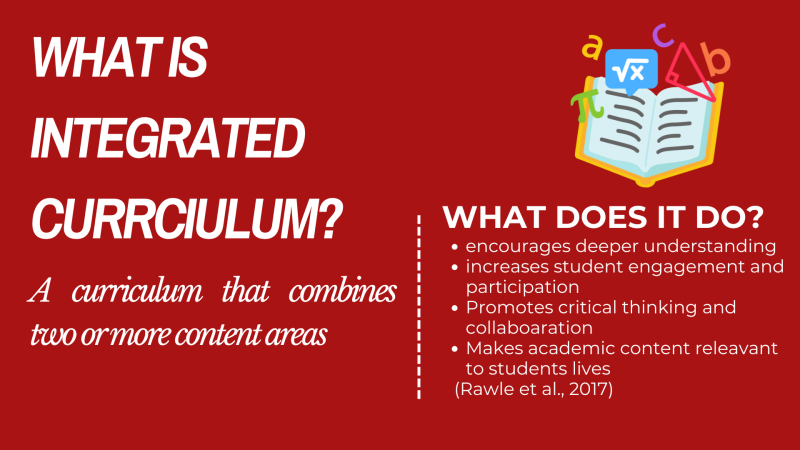
New teacher professional development slide show on Integrated Curriculum

Create Your Own Website With Webador